
Missed Shifts Are Never Just Missed Shifts

Updated: Aug 7
How to handle employee absenteeism and the hidden costs lowering your project margins.
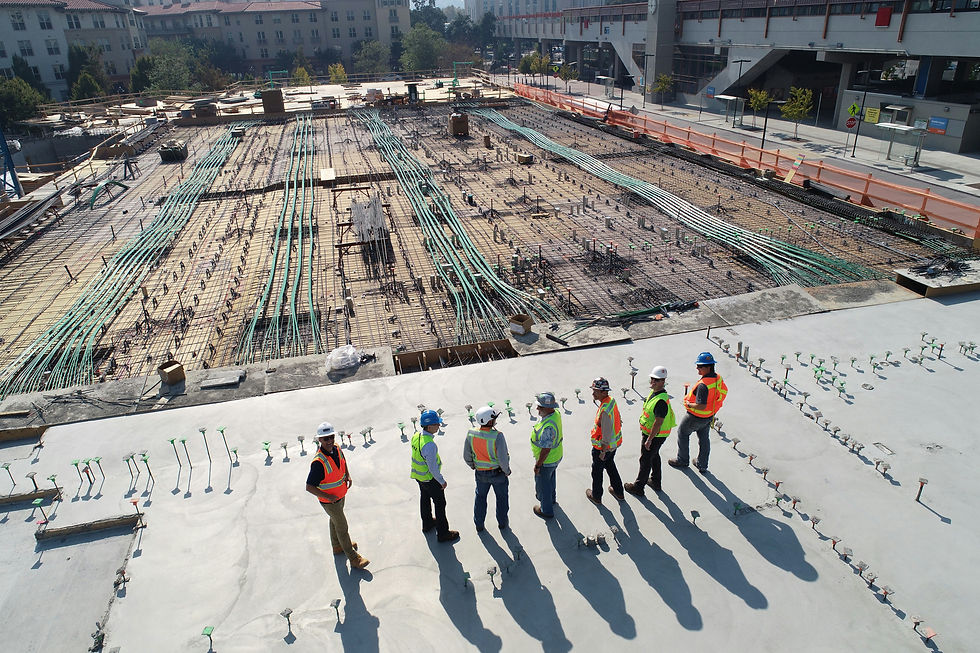
The Okanagan building season doesn't negotiate. From the moment the ground thaws in April through the final push before Thanksgiving, the window is narrow. The margin for disruption is even narrower.
Contractors running crews across Kelowna, Vernon, and Penticton know this better than most. A fixed-price reno or commercial build that pencils out in March stops pencilling out the moment the schedule slips.
It slips fastest when someone doesn't show up on a Tuesday morning—and nobody saw it coming.
The Cost of a Sloping Schedule
One missed shift on a hot July day doesn't just slow down one trade:
It stalls the sub-trade working directly behind them.
It pushes back your scheduled municipal inspections.
It forces a crew lead to cover two roles instead of one, leading to fatigue and poor decisions in both.
By Friday, a single absence has compressed into a problem that doesn't fit neatly into any line item on your budget. That is the visible part you are already managing by feel.
But if you are trying to figure out how to handle employee absenteeism before it breaks your schedule, you have to look at what was forming two weeks before that Tuesday morning.
The Invisible Margin Drain: Absenteeism vs. Presenteeism
There are two distinct attendance problems eating into fixed-price contract margins. Most operators treat them as the same thing. They are not. One is obvious, but the other looks like an employee checking out at work while still collecting a paycheck.
Absenteeism (The Gap): This is the worker who simply doesn't show up. It is visible, disruptive, and easy to count via missed shifts and sudden overtime. Contractors feel it immediately and respond to it immediately.
Presenteeism (The Drag): This is the worker who shows up but is mentally somewhere else entirely. They are on site moving materials, but their pace is off, their decision quality is degraded, and they are introducing errors that won't surface until the next trade touches their work.
Presenteeism is invisible on a schedule, invisible in a daily log, and invisible to a busy crew lead.
On a project with tight tolerances, drag is far more damaging than a gap. Presenteeism creates slower output, higher rework rates, and compounding friction across your sub-trade sequence. By the time it is visible in your monthly numbers, the loss is already in the past.
The two conditions travel together. The worker who calls in sick on Tuesday was rarely fine on Monday. The conditions were forming for weeks in how they were handling pressure and engaging with the team.
The absence is just the final visible event. The presenteeism was the early warning signal.
How Enterprise Firms Handle "Human Capital Risk"
Enterprise infrastructure firms operating across multi-million dollar portfolios don't manage this problem by gut instinct. They track it systematically under a risk category called Human Capital Continuity Risk.
At that scale, the logic is straightforward: if people conditions can be observed early, decision windows stay open longer. If they can't, leadership is always reacting to disasters that were already inevitable.
Enterprise Infrastructure, Scaled Down for SMBs
Motionwave brings that same early visibility infrastructure to mid-market operators running crews of 10 to 150 people.
Through a fully virtual, anonymous weekly pulse that takes under 90 seconds per crew member to complete, you get clear visibility without site disruption. No clipboards, no lengthy surveys, and no HR department required.
Our system surfaces aggregate workforce stability signals so you can see if team conditions are holding steady or becoming volatile. The instrument doesn't replace your judgment—it simply extends the window in which your judgment has room to operate.
The WorkSafeBC Reality: Fatigue is a Financial Risk
WorkSafeBC is explicit on the relationship between worker fatigue, distraction, and incident risk on site. Cognitive impairment from stress and sustained pressure slows down reaction times. This directly increases the likelihood of near-misses and recordable incidents—particularly in high-exposure environments like residential framing, roofing, and mechanical trades.
Beyond the human cost, this matters heavily to your bottom line. Business owners frequently look for ways to lower their WorkSafeBC premium rates in construction, but the answer isn't in the paperwork. It’s on the job site.
A single recordable incident can shift your experience rating in a costly direction that follows your business financials for years.
A pattern of minor incidents signals to inspectors that your operation has elevated risk, driving your premiums up for multiple rolling calculation years.
Under BC's occupational health and safety framework, employers have a legal duty to address conditions that create a foreseeable risk of injury. A worker showing up exhausted, distracted, or carrying sustained operational pressure is a foreseeable risk condition.
The question is: do you have a structured way to see that risk forming before it becomes an official insurance claim?
What a Workforce Condition Check Actually Surfaces
Most BC contractors run on observation and instinct when trying to reduce turnover in construction, which works until it doesn't. Motionwave operates 100% virtually to change that. There is no consultant stepping onto your job site, no paperwork, and no disruption to your daily workflow.
The easiest entry point to protect your project timelines is our Workforce Condition Check. This is a single-engagement visibility assessment that compares what you currently believe about your crew's condition against what your crew anonymously reports.
Our process is simple and entirely human-interpreted:
Your Operational Read: You provide your baseline perspective on the crew's operational status.
Anonymous Crew Pulse Data: Your crew completes a fast, 90-second mobile check-in.
The Governed Analysis: We deliver a customized, written brief within five business days mapping where those two pictures align, where they diverge, and where conditions appear steady or starting to move.
It does not prescribe rigid actions, it does not identify individuals, and it requires no long-term commitment. It simply gives you a clear, structured picture of your crew's reality so you can make better choices.
If you are heading into the busiest block of the Okanagan building season and running purely on instinct, find out if your read is actually accurate.
Request access to your Workforce Condition Check at
Motionwave Group Ltd. | Registered in British Columbia | PIPA-aligned
All signals are aggregated and anonymous. No individual is identified. Interpretation follows the Motionwave Governance Charter.

Comments